
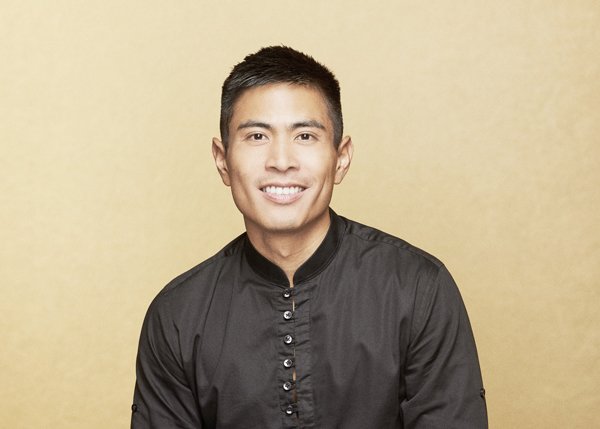
Bing Chen is a co-founder of Gold House and one of the earliest minds behind the creator economy. From shaping YouTube’s global creator strategy to launching ventures that fuse culture with capital, Bing has always worked at the intersection of brand, identity, and influence. And he’s built his career on a simple belief: influence isn’t something you keep—it’s something you give away.
SNP
You’ve said influence isn’t about amassing power—it’s about giving it away. What do you mean by that?
Bing
My father passed away when I was 15, so I know that you literally take nothing when you go. And I think that’s imprinted in me. I’m not the guy who’s trying to amass power or be selfish with it because I think the world is zero-sum. I’ve chosen a life where as I accumulate influence and power, I’m constantly giving it away to other people. And I find that like it’s not just the right thing to do, but it gives you a fundamentally different level of credibility and cultural capital that’s really, really important. Instead of trying to slice a pie, just build a bigger pie so that everyone can participate.
SNP
You became one of YouTube’s most influential people at 22 without managing a team. How?
Bing
When you’re 22 and an IC, you have nothing to give anyone. So you have to figure out, well, if you have nothing to give, then what do they want? And then you can figure out piece by piece what you could give them. I became very, very, very good at that. And so step one was I met with literally everyone. The head of music, the head of every region, the head of every function, head of marketing, ops, policy. And my question always started out, disarmingly, “I’m brand new, I just wanna help everyone, and I have a lot of enthusiasm. What are your business goals?” And it came to the point where a few years later, senior execs would come to me and say, “I don’t know who you are, but I’m told I need to talk to you about the real org chart.” So that’s what I could give: cross functional understanding of goals.
SNP
How does that tie into your philosophy on personal branding?
Bing
The best person is the best marketing. Do you have something that is ownable, that’s quotable? But then you have to understand that marketing is a means, not an end. Why are you trying to be more known or famous? What are the quantitative and also the qualitative goals of that? In a business context, the way that marketers would talk about this is cultural relevance—do you have a large and highly engaged endemic base?
SNP
You ended up leaving YouTube for a startup that initially raised $50 million but then collapsed “spectacularly.” How did you overcome that?
Bing
It was really frustrating. It was really painful. But it was only short term. People who deliver great work and are good-hearted will always win in the midterm. I think it’s important to re-anchor yourself in your values. What am I here for? Why am I uniquely qualified to be or do that? And then you have to learn to rest in resilience. Like I often say my confidence does not come from my accumulation of success—it comes entirely from my survival through adversity. Because when you do not fear failure, you expect it and know how to weather it. Jensen Huang famously said, “I will not hire anyone who’s not suffered.” And he’s right. Because only then—only then can you welcome and be prepared for the heights.
Bing’s career is proof that influence isn’t about titles or control—it’s about connection, generosity, and playing the long game. You can hear more from Bing by joining us at Eighty Five, SNP’s leadership program happening this November, where Bing will be a featured speaker.